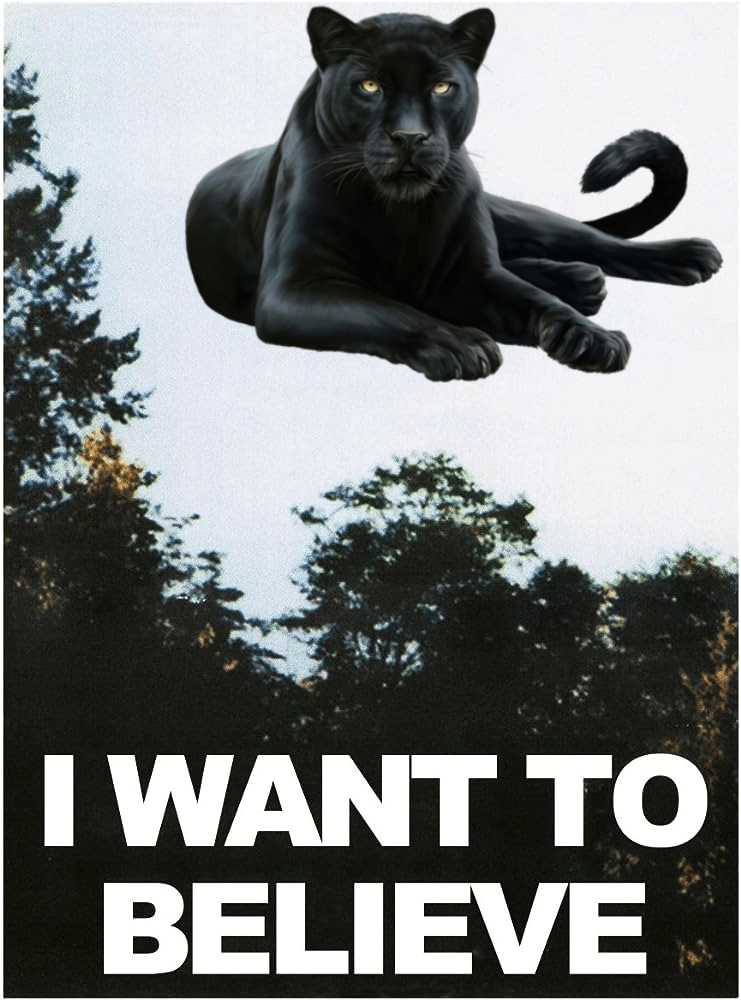
It’s a beautiful Saturday evening in Scotland and I’m off to see a leopard… enclosure. I’m on my way to see a leopard enclosure. Not a current one, I’m on my way to see an enclosure that used to house a leopard in 1823. Technically you could say I’m just on my way to see a small building, but that’s not the point. It’s about what the building represents: a Scotland of the days of yore where rich people would show other people how rich they are by buying non-native big cats.
Back in the day, it was the done thing – if you wanted to show other people that you’re rich and glamorous in an ostentatious type of way, you’d have a little section of your castle or estate where you house your exotic cat. I imagine that the townspeople did not like the possibility of having an escaped lion roaming the streets, but I imagine the kings, lords and earls of that time probably didn’t give too much of a hoot about what the townspeople thought.
Apparently the first Duke of Rothesay had a pet lioness, while King James VI had three pet lions in an area of Stirling Castle called the Lion’s Den that you can still go and visit. There’s also a cave at Dunnottar Castle called the Lion’s Den, where the 5th Earl Marischal kept his pet lion, which according to local legend did once escape. James VI kept a collection of animals at the Palace of Holyroodhouse in Edinburgh that included lions, tigers and lynx. And when Edinburgh Zoo was established, it mainly consisted of animals that were donated by various UK aristocrats.
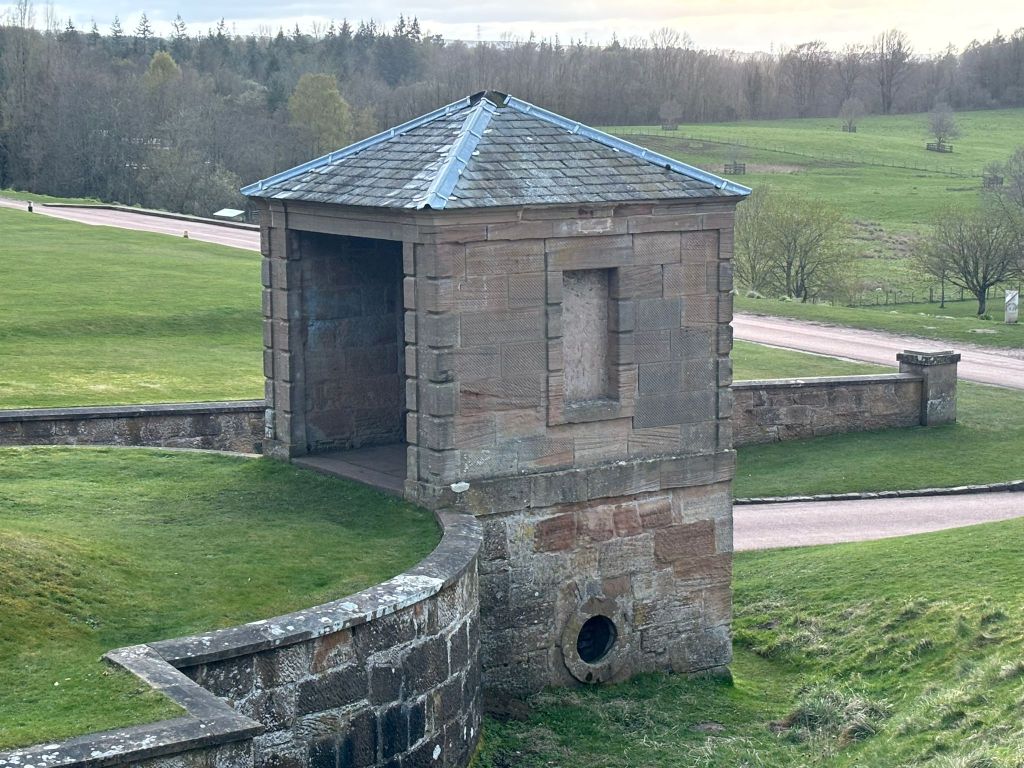
Here is the Leopard House at the hunting lodge of Chatelherault Country Park, where the 10th Duke of Hamilton kept his pet leopard in 1823. I was struck by how tiny and unassuming it is, and I dare assume that the Duke probably didn’t really let his leopard roam freely around the park. Instead, the leopard was housed in that tiny little enclave as a status symbol, a way to show visitors that you’re worldly and glamorous, like having a lion statue at the front of your building, except it’s alive.
Scotland clearly has a history of housing non-native big cats, but how recent of a history is up for debate, as there are people all around the country who insist that they’ve seen a big cat in the wild. In this post, I’ll be talking about the big cat sightings in Scotland that span several decades, moving on to the actual, physical evidence of there being big cats in the UK. I will then get to the Speculation Section where I speculate wildly and share my thoughts on Scottish non-native big cats.
Sightings
I honestly didn’t think I’d know anyone who’s seen a big cat in Scotland, but pretty shortly after I started researching the topic, I heard about someone’s outdoorsman father being convinced that he’d seen big cats in the great outdoors. And he’s not alone: even though the amount of sightings has decreased over the years, there are still considerable amounts of people who claim they’ve seen strange non-native catlike creatures.
The phenomenon is common enough in Scotland to have two organisations formed around it: The Scottish Big Cat Research Team has collected more than 1,600 big cat sightings going back to 1947, after being started in 2019 by a former military intelligence officer who was inspired by a big cat sighting that he experienced 25 years ago. There’s also the Scottish Big Cat Trust, a charity focused on scientific research of non-native big cats in Scotland, with an online database of more than 1,300 sightings.
Possibly the most famous big cat that’s been spotted over the years is the Beast of Buchan, a big cat that’s allegedly trawling through the Aberdeenshire area, who has been spotted several times by different people over the years, including an off-duty police officer. One eyewitness said, “I couldn’t believe what I saw. My feet were stuck to the ground. It was huge, it was very, very big. It was a very quiet night and darkness was in the offing, but it was jet black and it was plain to see.”
As a part of a Freedom of Information Act request, emails were uncovered between Police Scotland and Science and Advice for Scottish Agriculture requesting advice for an investigation into a big cat, asking for their help in identifying whether the paw print and scat found in the area would fit a large feline. The officer in question said in his original email,
“I’ve had lots of reports over the past three years of big cat sightings and activity on the north coast, mainly in the Bettyhill area of Sutherland. There have been sightings of a large feline and a lot of dead or injured sheep. On one occasion I was present when a ewe was brought in off the hill with two puncture marks on the front of her right shoulder and two at the back of it. The wounds were over three inches apart. Some of the recent carcasses had very large puncture marks into the bone.”
It wasn’t the first time Police Scotland got involved in big cat sightings: in 2018, police in East Ayrshire urged residents to be careful when they’re outside due to reports that a black panther had been seen in the area. They deployed a helicopter to help track it down, but the SPCA later concluded that it was probably just a particularly large house cat.
Where’s the evidence?
You would think that there would be no physical evidence for something that sounds so outlandish, but you’d be surprised: there have been big cats caught in Scotland in the past. Last year, two lynx were captured by the Royal Zoological Society of Scotland near Kingussie, and two more were spotted. Experts believe that they were privately owned without licence and released illegally into the wild by their owner.
And it wasn’t the first time a big cat has been caught. In 1976, residents in Cannich reported seeing and hearing big cats in their area, and local farmers had reported livestock getting killed. After three years of sightings, one farmer, a local man called Ted Noble, decided to build a cage to capture whatever it was that people were seeing. To everyone’s shock, he actually caught a puma. The puma moved to a Scottish wildlife park and was given the name Felicity. She was reportedly fat and tame, like she’d been well-fed and was used to having humans around. They suspected she had been someone’s pet.
The kicker of the story is that the puma didn’t match the description of the big cats that were seen by the locals. Sightings also continued even after Felicity was captured, so if one was to speculate, you could assume that Felicity was not the only culprit in the area. But it is still notable in the big cat investigations field that an actual puma has been caught in the Scottish Highlands, and If you want to see the evidence for yourself, Felicity has been taxidermized and is located in the Inverness Museum & Art Gallery.
The other more convincing evidence isn’t from Scotland, but it is pretty conclusive proof that there’s big cats roaming in the UK. Professor Robin Allaby, a biologist from the University of Warwick, tested a sheep carcass for DNA after a woman had spotted a large black cat feeding on it. Professor Allaby found DNA of a big cat of the Panthera genus on the carcass. It isn’t the first time DNA evidence has been found in the UK, but it’s the first time someone has gone on record about it.
Other labs have also claimed to have found big cat DNA, but they’ve reported on it anonymously to the BBC Wildlife Magazine team, presumably because they want to avoid the automatically foisted reputation of being a nutjob or a scammer that comes with subjects like these. A farmer had found a piece of hair stuck to a barbwire fence after a series of attacks on his sheep, and the anonymous lab reported that they found the DNA to be a 99.9% match to the leopard species Panthera Pardus.
Speculation Section
So, how and why would this be happening? The theory is that when the UK passed the Dangerous Wild Animals Act in 1976, the law changed into necessitating that exotic pet owners would have to register their pets, pay for a yearly licence and ensure that they’re kept in safe and habitable conditions. The first theory is that exotic pet owners wouldn’t have wanted to pay the yearly fee and risk hefty fines and prison if they’re caught flouting the rules, and so they’d release their illegal pets into the wild, where they had bred and survived in small numbers.
The second one is that some of the big cats originate from being kept in private collections today. Exotic cat ownership today isn’t too different from what it was back in the day, it’s the same type of ostentation waving of cash as posting Instagram videos of your shopping haul from a mall in Dubai – very few people will be genuinely impressed, and the rest will wonder if that’s ethical. But these people do exist, and they still use exotic pets as status symbols, just like they did in the olden days.
According to the Born Free Foundation, a UK-based charity that aims to stop exploitation of wild animals in captivity, there are 320 wild cats that are kept as pets or in private collections in the UK, including 61 big cats – 11 lions, 8 tigers, 11 leopards, 18 pumas, 10 cheetahs, 2 ligers and 1 jaguar. 11 lions! Naively I expected there to be zero privately owned lions, but here we are. Scrolling through Born Free’s interactive map I also found out that there are two American alligators living in Clackmannanshire, privately owned by a man who apparently has more than 100 snakes and breeds alligators in the garden of his two-bedroom home – as good a reason as any never to go to Clackmannanshire.
Some places in the UK have larger concentrations of exotic pets, like Cornwall, where there are 14 different types of exotic cats registered, including a Malaysian leopard cat, several pumas, Asian fishing cats and Jaguarundis. Coincidentally, Cornwall is the home of probably the UK’s most well-known big cat myth, the Beast of Bodmin Moor. And these are only the exotic pets that we know of – I’d be willing to bet that a great many people who think “you know, I could spend £20,000 on some pumas” will not report that impulse to the council.
A large part of the exotic pet industry relies on illegal sales on the black market, but the exact number of these sales is, of course, difficult to quantify. But the UK Border Force seized 250 endangered species and illegal wildlife products at airports, ports and mail depots during a 2026 operation. They added in their statement that “Wildlife crime is worth up to £17 billion a year globally, making it the fourth largest international crime – behind firearms, drugs and human trafficking.”
Most of this trade is smaller animals like exotic birds or fish, but it’d probably be fair to assume that there is also a market for illegal big cats, too: there’s a 2013 BBC article saying that border forces confiscated eight live big cats that someone was attempting to smuggle into the UK. It is also suspected that the lynx that were captured and spotted in the Highlands originated from the black market.
If someone has to resort to buying from the black market and having a big cat unlawfully, I’d be willing to wager that they don’t keep those animals incredibly safe and make sure that there’s no chance that they’ll escape. And what’ll they do if they escape, report it to the police? Likely not. Having a big cat illegally is a serious crime that can land you in prison, so they’d probably just pretend that nothing happened and they know nothing about it.
Conclusion
If you listened very closely, that faint ‘ping’ sound that you may have heard while reading this is the sound of me lodging this theory firmly into the maybe-pile that lives in my mind. I do know that it’s not 100% certain, I’m relying on empirical evidence and a few captured cats. But there’s just a whole lot of empirical evidence! Ask around, and you’re likely to find someone who thinks they’ve seen a big cat in the wild here. And some of the physical evidence, like the DNA in the carcass, seems awfully hard to fake – not impossible, but hard.
Putting it all together, I don’t necessarily think the existence of non-native big cats in Scotland the most implausible theory I’ve ever heard. But the great part about this one is that as far as conspiracies go, this one is goofy and harmless: even if I start to believe in my heart of hearts that there’s panthers and pumas living in the hills, it’s not going to stop me from going outside, as the odds of me dying of a puma attack in the Scottish highlands are almost certainly completely non-existent.
The Scottish big cat theory is the best type of conspiracy theory – it’s completely harmless to believe in it, but it could also feasibly be true. Antivaxxers and Pizzagate-people cause actual harm with their conspiratorial beliefs, but stalwart believers in the Loch Ness Monster? See, that’s just a bit of harmless fun. This is in that same category. No one can feasibly be hurt by this, but there’s a lot of fun to be had. Maybe I’ll go on a lion safari in Orkney or volunteer with some sort of a big cat spotting organisation – all of these options sound like a great day out.
I’ll be keeping an eye out for stories about big cats in Scotland in case the story develops, maybe this is even the first of a series of big cats in the UK. As of now, the theory is unconfirmed, but there is some credible evidence, and stranger things have happened. Maybe in a week or two, they’ll capture a panther in the Highlands or find a leopard on the Ayrshire coast. I think the circumstances that would’ve landed them there are likely tragic tales of the illegal exotic pet trade, but I do think it could happen. And if it does, I’d like to get some evidence.
Until next time, stay spooky!
 WOO-WOO WEBSITE 👽
Leave a comment